Dignity is not a bonus feature
Support should never cost someone their self-respect. We design for short queues, plain language, minimal documentation, and conversations that treat people as neighbors rather than applicants.
Our story
Charity for All works to connect Chicago neighbors with practical support, caring relationships, and opportunities to thrive.
Charity for All is a nonprofit corporation in Chicago, Illinois, recognized by the Internal Revenue Service as a 501(c)(3) public charity. Our exemption has been effective since April 23, 2012, and we are classified under Internal Revenue Code section 170(b)(1)(A)(vi) — the classification for publicly supported organizations that rely on gifts from a broad base of donors rather than a single funder.
That classification is worth pausing on, because it describes our relationship with you. A publicly supported charity is designed to be answerable to many ordinary supporters. It is not a private endowment operating at a distance. It works when a wide group of people each decide, independently, that the work is worth funding.
Most hardship in a large American city is not dramatic. It is a car repair that arrives the same week as a utility bill. It is a caregiver who cannot take a shift because there is nobody to watch the kids. It is an older neighbor who has not had a real conversation in nine days. These situations rarely trigger a formal system, and they are precisely where a neighbor makes the difference.
Charity for All exists in that gap. We are not attempting to replace large institutions, and we are candid that we are a small organization. What a small organization can do well is respond quickly, treat people as individuals, and stay close enough to the ground to notice what is actually needed.
Our values are not decoration. They are the constraints we accept even when they make our marketing less impressive.
Support should never cost someone their self-respect. We design for short queues, plain language, minimal documentation, and conversations that treat people as neighbors rather than applicants.
We publish what we can substantiate. You will not find invented statistics, borrowed testimonials, or partner logos we have no relationship with anywhere on this website.
A one-day event photographs well. A reliable weekly presence changes outcomes. We plan for what we can sustain rather than what looks best in a single afternoon.
Our legal name, EIN, exemption date, and filing type are published so any donor, journalist, or neighbor can verify us independently and without asking permission.
Being straightforward about stage is part of being trustworthy. Charity for All has held federal tax-exempt status since 2012, and our current annual filing is the Form 990-N electronic notice, which the IRS makes available to organizations with gross receipts of not more than $50,000. Our accounting period ends December 31 each year.
In practical terms, that means we operate on a modest scale and depend heavily on volunteers, in-kind gifts, and individual donors. It also means that growth here is visible and traceable. If our activity expands, our filing obligations will change with it, and that change will be a matter of public record rather than a claim on a webpage.
You will notice that this website talks about focus areas rather than a fixed catalog of programs with attendance figures. That is deliberate. Focus areas describe the direction we are committed to and the kind of help we are organizing around. When a specific, recurring program is running with results we can document, we will describe it as such, name the method behind any number, and date it.
Our approach in practice
We are building the organization around commitments that a small team can genuinely keep, in an order that makes sense.
Foundation
Federal tax exemption in place since 2012, annual filings maintained, and organizational facts published openly for verification.
Current
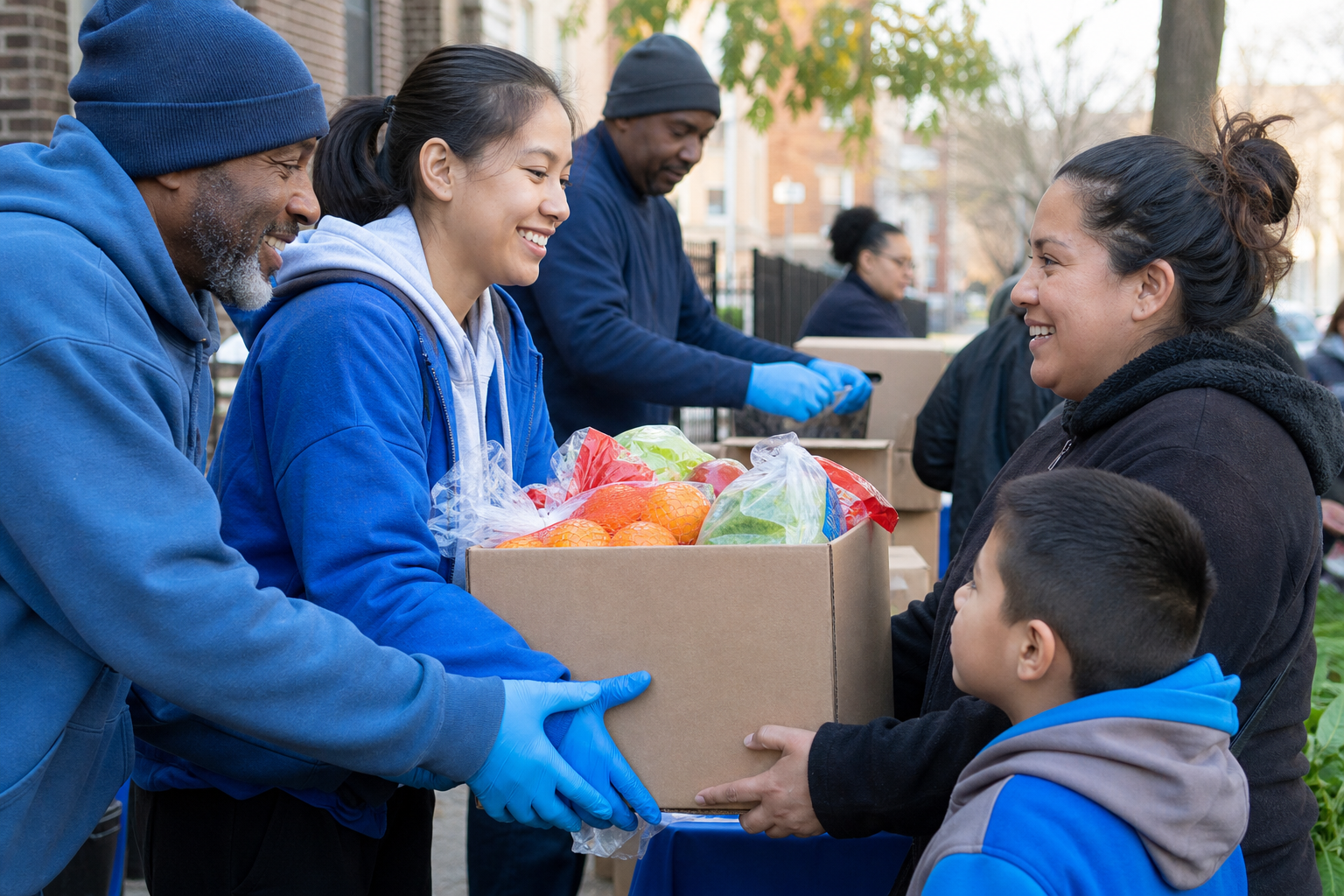
Defining food and essentials, youth and family support, and community connection as our working focus, and designing volunteer roles that are scheduled rather than improvised.
Next
Preparing online donation processing and a predictable schedule of neighborhood activity, so supporters know exactly what their gift sustains.
We are at the stage where one committed person changes what is possible. That could be you, and it does not have to start with money.